Services > Use case

Eradicate the “Silo Tax”: The Executive Blueprint for Unified Cyber-Fraud Leadership.

Close the execution gap between your Security, Fraud, and Finance teams with a formal Cyber-Fraud Trust Architecture™ —transforming disjointed liability into a board-ready, ROI-driven governance model.


The Fiduciary Mandate: Unifying Leadership to Protect the P&L

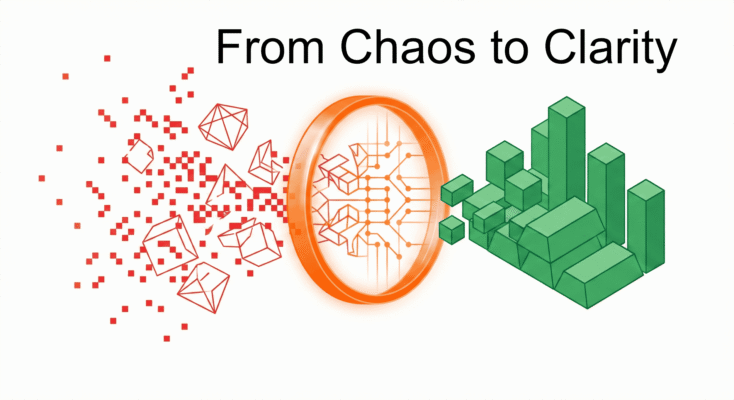
Finally, Stop the “Silo Tax” and Engineer Defensibility. Internal silos create a playground for sophisticated attackers and a magnet for regulatory fines. Cyber-Fraud Fusion Governance bridges the gap between technical logs and business logic, transforming disjointed liability into a board-ready strategy for EBITDA protection.

EXECUTIVE SUMMARY (TL;DR)

  • The Problem: You are managing risk across isolated departments without a formal mandate. This fragmentation creates a compounding “Silo Tax”—wasting millions in duplicate tools and customer acquisition costs—while exposing you to severe personal liability when cross-pollinated attacks fall into the “grey space” between teams.
  • The Framework: Establish a Cyber-Fraud Trust Architecture™ powered by a quantifiable cyber fraud framework. It bridges your existing SIEM telemetry with fraud business logic, explicitly mapping cross-silo RACI and financial cost assessments.
  • The Outcome: You transition from a frustrated coordinator holding broken processes together into the CFO’s greatest ally. By engineering defensibility, you protect EBITDA, meet regulatory oversight requirements, and deliver a proven Return on Security Investment (ROSI).

The Challenge

PHASE 1: IDENTIFY – The Fiduciary Reality of Fragmented Defences

The real pain of organizational silos isn’t just “missed threats.” It is the moment a Board member looks at you after a multi-million dollar breach and asks: “Who was actually responsible for this?”

The Uncomfortable Truth: While GRC platforms and AI detection tools are essential, you cannot buy a software patch for internal politics. Even the most advanced SIEM or fraud alert systems will fail to stop cross-pollinated attacks without a unified governance model guiding the human response. Fusing your Cyber and Fraud teams is a structural trust challenge, not just a tooling deficit.

Recent regulatory shifts like the SEC’s cybersecurity disclosure rules and NYDFS Part 500) have made it clear: executives can be held personally liable for breaches of the Duty of Oversight

In Canada, the stakes have escalated exponentially. OSFI Guideline B-13 strictly mandates that federally regulated institutions establish integrated technology and cyber risk governance, while Bill C-26 (CCSPA) introduces crippling monetary penalties and explicit personal liability for directors who fail to govern their critical cyber systems.

When roles, coverage, and control ownership aren’t clearly defined, you aren’t just vulnerable to hackers—you are vulnerable to regulators.

Identify which of these “grey space” scenarios is currently threatening your Standard of Care:

  • Scenario A: The Cross-Pollinated Threat Chain. A phishing attack steals employee credentials, which are then used to execute an AI-generated Deepfake BEC (Business Email Compromise). Cyber sees the anomalous login but lacks business context. Fraud only investigates after the wire is sent to a mule network.
    • The Result: A $4.5M average loss, and an internal audit finding of gross negligence for failing to connect the telemetry.
  • Scenario B: The Synthetic Identity Revenue Drain. A bot network successfully onboards synthetic identities, bypassing disconnected Identity and Access Management (IAM) and AML controls.
    • The Result: Not only does the fraud result in credit bust-outs, but it wastes 5–10% of the marketing team’s Customer Acquisition Cost (CAC) budget on fake users.
  • Scenario C: The Fiduciary Reporting Breach. A sophisticated attack compromises a third-party vendor (a Cyber domain issue) to slowly exfiltrate customer financial profiles for identity theft (a Fraud domain issue). Because the teams are siloed, Cyber treats it strictly as an IT containment event and fails to notify Fraud and Legal of the data impact.
    • The Result: You miss OSFI’s mandatory 24-hour incident reporting window and PIPEDA notification deadlines. The Board is blindsided by the regulator, resulting in massive compliance fines and executives being held personally liable for failing their fiduciary duty to govern risk.

PHASE 2: ASSESS – The “Silo Tax” Audit

Before you can architect trust, you must measure your current revenue leakage.

The “Silo Tax” doesn’t just manifest as direct theft; it bleeds your organization through hidden operational waste, customer friction, and resource burn.

Take this 30-second mental audit to pinpoint where the losses are happening.

30-Second Mental Audit

Slide to rate your current capabilities (0 = None, 10 = Fully Automated/Proven)

Threat Visibility (The CAC & Churn Leak) 0

Can your Fraud Ops team automatically see when a synthetic identity bypasses your Cyber IAM controls?

Low scores indicate 20-30% erosion of legitimate LTV through false positives.
Control Gap Visibility (The Talent Drain) 0

Have you eliminated “control drift” by integrating your existing security telemetry with AML ops?

Low scores link to alert fatigue and the industry’s $626M annual burnout cost.
ROI & Business Visibility (The Capital Leak) 0

Can you mathematically prove to the CFO how your current security stack reduces financial exposure?

Low scores result in 20-50% cyber insurance premium hikes.

PHASE 3: PRIORITIZE – Real Financial Cost-Assessment

To break down silos, you must shift the conversation away from technical fear and focus on Revenue Integrity.

You must present the Board with the true financial cost of unquantified liability.

By recapturing the Silo Tax to protect EBITDA, you combine

  • direct loss prevention with the
  • recovery of marketing waste,
  • elimination of incident response overhead, and
  • optimization of insurance premiums.

This turns unified governance into an urgent business mandate.

The CFO’s Greatest Ally (Proving ROSI): When you translate technical risks into exact financial exposures, you stop defending a “cost center.” You transform your function into a strategic value creator.

Example: A mid-tier financial institution used our framework to formally map their existing SIEM telemetry to their Fraud Operations logic. By reducing cross-silo investigation times and intercepting a $2M APP fraud chain in real-time, they demonstrated a 3:1 Return on Security Investment (ROSI) in year one—without ripping and replacing their core technology.

PHASE 4: OPERATIONALIZE – The Authority Pivot

You understand the fiduciary liability of operating in silos. To engineer defensibility and protect your organization under audit, you must execute the following DIY Lifecycle Defence Plan:

1. Establish the Unified Risk Charter:

Draft a formal governance charter that mandates cross-functional data sharing between Cyber, Fraud, AML, and Finance. Ensure it aligns with FATF and PSR compliance standards.

2. Execute Cross-Silo RACI Mapping:

Explicitly document who owns the “grey space” between departments. Define who has the authority to freeze an account or sever a vendor connection without calling a committee meeting.

3. Deploy Unified Financial Metrics:

Stand up recurring risk reviews that merge cybersecurity telemetry with fraud business logic, reporting a single, defensible ROSI metric to the Board.

⚠️ The “Speed-to-Certainty” Reality Check: Depending on the environment, executing this plan can face the following challenges.

  • Forcing deeply territorial departments to share guarded data and concede budget authority often takes 6 to 12 months of cultural resistance and committee debates.
  • Prolonged time means your Duty of Oversight remains unfulfilled, and your organization remains exposed to devastating financial loss.

Internal alignment often takes up to a year. We establish your board-ready Cyber Fraud Quantification Framework and governance charter in 45 to 60 days.

Branched Flow Inc. provides the exact Cyber-Fraud Trust Architecture™ roadmap you need to bypass internal turf wars. Because we are an objective, specialized third party, we provide a confidential safe space to cut through the politics that stall internal initiatives.

We do not replace your tech stack; we optimize it through engineered human governance.

We build your defense so that if a breach happens, your “paper trail” of fusion is bulletproof and actively satisfies stringent regulatory mandates.

You get the formal mandate, the budget, and the authority to lead.

Engineer Your Defensibility

Request your 30-minute Confidential Diagnostic. We’ll identify your three highest-leverage fusion points—no sales pitch. You’ll walk away with a custom “Silo Tax” roadmap and a board-ready strategy slide

Latest Intel & Insights

Get the actionable intelligence you need to strengthen your defenses. Dive into our expert research, articles, and webinars on the evolving cyber-fraud landscape.

Visit our Resource Hub